New Systems & Full Replacements
Septic Tank Installation Covington KY
From the perc test to the final health-department sign-off, we handle new septic systems for Covington homes — priced in ranges, permitted properly, and built to last decades.
- Perc test and site evaluation handled first
- Conventional and engineered systems installed
- Permitted through NKY Health before we dig
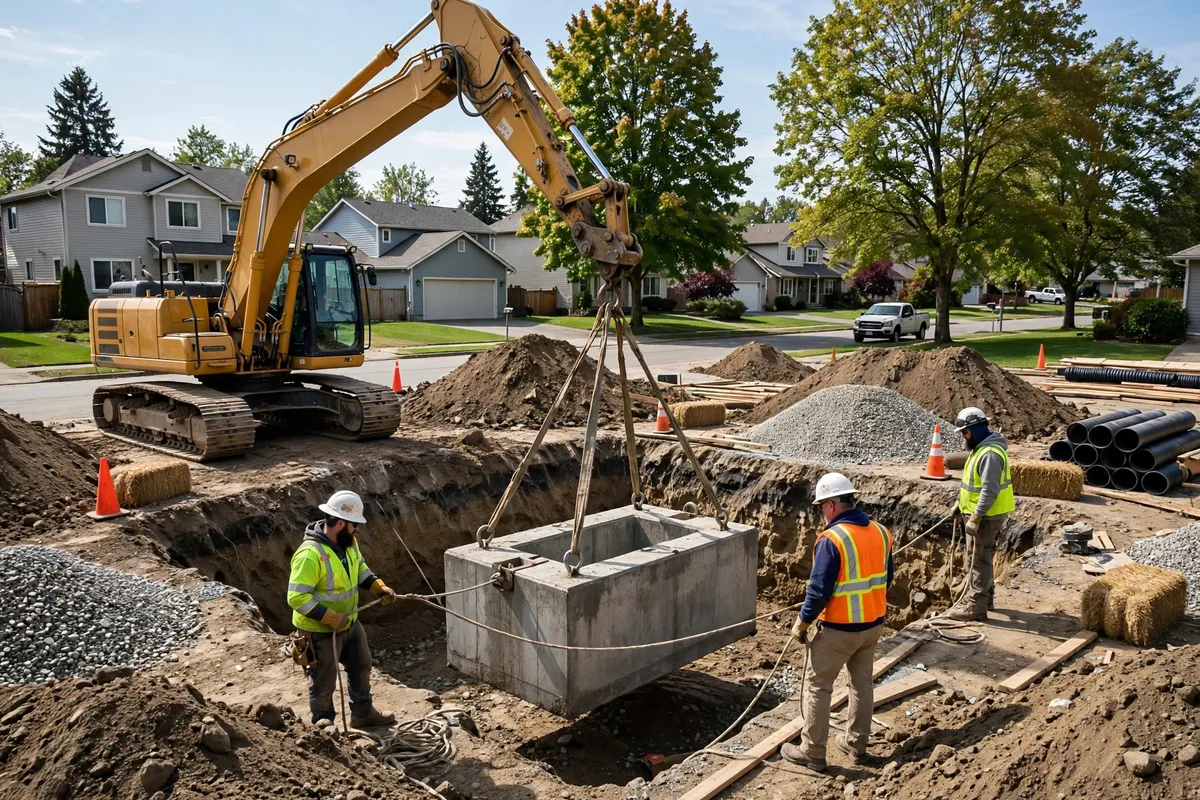
When the old system gives up or you're building past the sewer line, a search for septic tank installation covington ky usually starts with two questions: will my lot even take a system, and what will it run me? Here is the plain truth — the ground decides. Your soil, your perc rate, and your water table determine whether you get a simple conventional gravity system or an engineered one, and that single decision moves the price more than anything else on the job.
Most Covington installs fall into two buckets. A conventional gravity system — tank plus gravity-fed absorption field — typically lands in the $3,000–$8,000 range. An engineered system — mound, aerobic treatment unit, or drip distribution — runs $8,000–$20,000 or more, because it is designed around soil that will not absorb the old-fashioned way. Below is how we figure out which bucket your property falls into, what the permits require, and when a repair stops being worth it.
Septic Tank Installation Covington KY: What Your Property Qualifies For
Whether your property gets a conventional gravity system or needs an engineered one is decided by the site evaluation and perc test — not by preference, and not by budget. Northern Kentucky Health Department rules require a site evaluation before any on-site system is approved, and the soil has the final word.
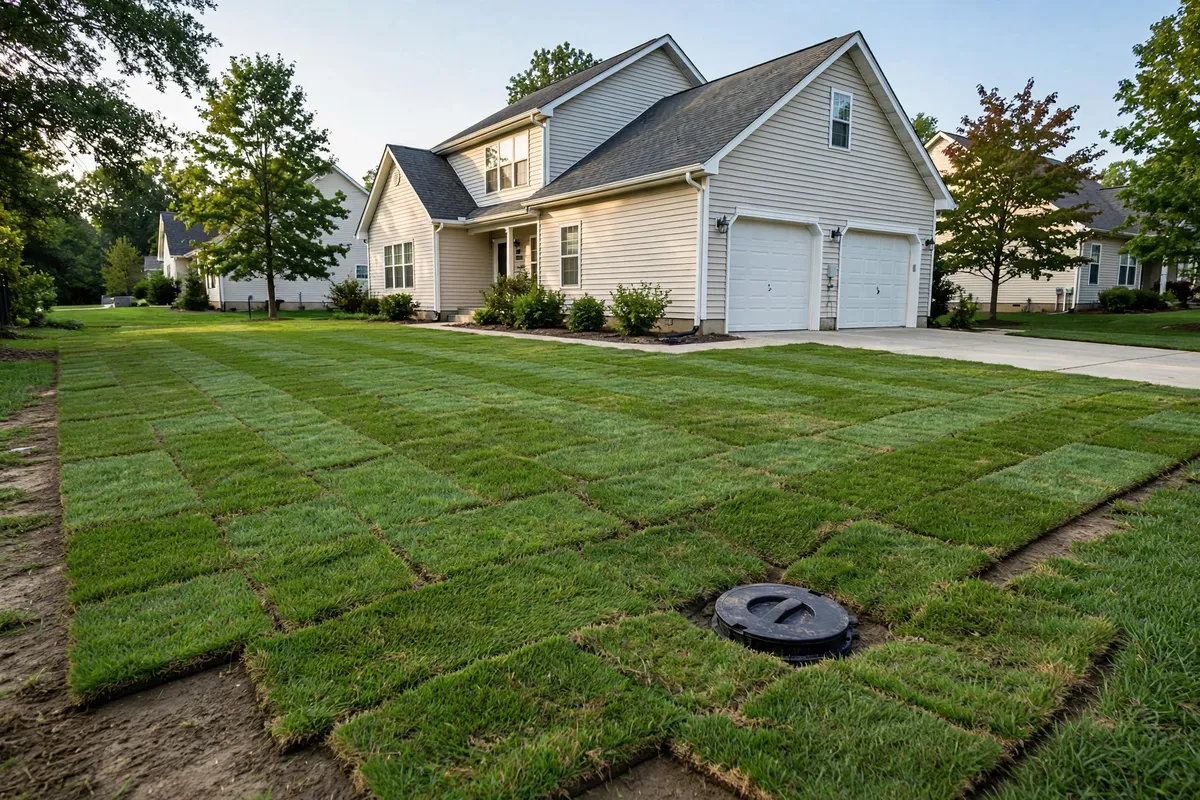
In practice it breaks down like this. If your soil percolates well, the seasonal water table sits deep enough, and the lot has room, you get the simple gravity design: wastewater flows downhill from tank to absorption field with no pumps and no controls. If the soil is heavy, the water table runs high, or the lot is tight or sloped, the design has to be engineered — a mound built above grade, an aerobic unit that treats wastewater before it reaches the field, or drip lines that dose it out in small amounts.
That is why two neighbors can pay very different prices for what sounds like the same job. The tank itself is the cheap part. The engineering, the imported sand for a mound, the pumps and control panels — that is where the money goes. We tell you which category your lot falls into before you spend a dollar on equipment.
- Site evaluation and perc test before any design is drawn
- Conventional gravity where the soil allows it — cheapest to build and own
- Engineered mound, aerobic, or drip designs where the soil demands it
- All permitting handled through NKY Health before excavation
Everything above is part of what Covington Septic Pumping does every week across Covington, KY.
Conventional Gravity Systems: The Simplest Design That Still Works
A conventional gravity system is a septic tank paired with a gravity-fed absorption field — no pumps, no electronics — and it is the least expensive system to install and the cheapest to own over its life.
The parts are straightforward: a watertight tank (concrete is the workhorse), a distribution box, and absorption trenches filled with stone or chambers. Wastewater leaves the tank, splits evenly at the distribution box, and percolates down through the soil, which does the final treatment. With nothing mechanical to fail, a gravity system that is pumped on schedule can run 30 to 40 years with little more than routine care.
On cost, a new conventional gravity system in Northern Kentucky typically lands in the $3,000–$8,000 range, with most straightforward jobs falling between $4,000 and $7,000. The spread comes from tank size, how much digging the lot requires, the length of field the perc rate demands, and permit fees.
- Concrete tank sized to bedrooms and water use
- Distribution box and absorption trenches built to code depth
- Permit, inspections, backfill, and final grading in the quote
- Best candidate lots: good perc rate, deep water table, adequate usable area
Engineered Systems: Mound, Aerobic Treatment, and Drip Distribution
An engineered system is a septic design that treats or distributes wastewater mechanically because the soil alone cannot finish the job — and it costs more because you are buying engineering, materials, and equipment, not just a hole in the ground.
A mound system builds the absorption bed above natural grade in imported sand — the fix for high water tables and shallow soil. An aerobic treatment unit adds oxygen and mixing to break down waste before it reaches the field, which lets a smaller field do the work; it needs electricity and a service contract. Drip distribution pressurizes small doses through tubing, spreading effluent evenly across marginal soil.
Expect $8,000–$20,000 or more for an engineered install, depending on which design the soil demands and how much material has to be brought in. Kentucky regulates heavy soils strictly: under 902 KAR 10:085, soils with 40% or more clay fall into Soil Group IV and require soil borings to 42 inches plus a professional soil evaluation before any design is approved.
The Perc Test and Site Evaluation Come First
Before any system is designed or priced honestly, Kentucky requires a site evaluation — and the perc test is the core of it: a measured test of how fast your soil absorbs water.
Here is what actually happens. We dig test holes and take soil borings (to 42 inches where the state requires it), check the seasonal high water table, and map setbacks from your well, property lines, and the house. A certified inspector reviews the findings, and only then does anyone draw a system design.
Straight talk: if you are comparing septic tank installation covington ky quotes and one of them prices a full system without a perc test on your lot, that quote is fiction. No test, no design, no honest number — in that order.
- Test holes and soil borings to state-required depth
- Seasonal water table and setback measurements
- Written results you can use with any installer
- Clear recommendation: conventional vs. engineered
Permits in Kentucky: What Has to Happen Before Anyone Digs
Under 902 KAR 10:085, a construction permit must be obtained BEFORE any portion of the system is constructed — it is issued only by a certified inspector, and only to a certified installer or the homeowner.
The state sets a $50 on-site sewage disposal permit fee, and Kenton County adds local fees on top; all-in, permits typically run $250–$650 according to national cost guides. The permit expires one year from issuance unless it is extended, so timing matters. Kentucky also certifies installers in tiers under 902 KAR 10:140 (provisional up through master), with training, testing, continuing education, and liability insurance required at each level.
We handle the paperwork end to end: the application, the site evaluation forms, and scheduling inspections with the Northern Kentucky Health Department's Environmental Health office (8001 Veterans Memorial Drive, Florence, KY 41042 — 859-341-4264).
When Replacing the Whole System Beats Repairing It
When the tank is structurally failing or the absorption field is fully done, replacing the system beats repairing it — no repair can buy back soil that will not absorb water anymore.
Homeowners usually reach this call one of three ways: the repair estimates keep climbing past half the cost of new, the system has failed twice in a few years, or a sale inspection reports the field as failed and the buyer will not close without a new system. A maintained system lasts 20 to 40 years — steel tanks more like 20 to 25, concrete 40 or more.
If you are weighing septic tank installation covington ky against one more round of repairs, get both numbers side by side before you decide. We will quote the repair range and the replacement range on the same visit — and tell you straight which one we would spend our own money on. Details: septic tank repair options.
What the Timeline Looks Like, Start to Finish
From the first site visit to the health department's final sign-off, a typical install takes a few weeks — and most of that time is testing and permitting, not digging.
The sequence runs: site evaluation and perc test, system design, permit application and approval, then excavation and setting the tank (usually one to three days of actual digging), followed by inspection, backfill, and final grading. Summer is the best digging season in Kenton County — dry ground, long days.
- Week 1: site evaluation, perc test, system design
- Weeks 2–3: permit application and health department approval
- Dig days: tank set, field built, inspected, backfilled
- Final: grading, seeding-ready surface, paperwork filed
The Kentucky process
How a New System Goes In: Evaluation, Permit, Dig, Inspection
Around Covington, a septic tank installation follows an order set by Kentucky rule, not by the installer’s preference: the lot is evaluated first, the design is permitted second, a certified installer builds it third, and the health department inspects the open work before any of it gets covered. Read quotes with that order in mind — the cheap number that skips steps is not a bargain, it is a system the county never approved.
Step 1 — the lot gets evaluated before anything is designed
The first step is a site and soil evaluation, and nothing is designed, priced, or permitted until it is done. The soil profile, the perc rate, the seasonal water table, and the setbacks from wells, property lines, and the house all get measured. Heavy Northern Kentucky clay gets extra scrutiny: under 902 KAR 10:085, soils with 40 percent or more clay are Soil Group IV and require soil borings to 42 inches plus a professional soil evaluation before a design is even considered. The evaluation is what decides conventional versus engineered — the ground votes first.
Step 2 — the permit runs on Form DFS-307
Once the evaluation supports a design, the application goes in on Kentucky’s Form DFS-307, the On-site Sewage Disposal System Construction Application and Permit. It is filed with the certified inspector at the local health department — for Covington and Kenton County, the Northern Kentucky Health Department — together with the $50 state permit fee plus the fee set by the local board of health (902 KAR 10:110). Under 902 KAR 10:085, no portion of the system may be built before that permit is issued, and the permit stays valid for one year. The department also keeps the as-built record of what actually went into the ground.
Step 3 — only a certified installer builds it
Kentucky issues those construction permits only to certified installers, or to a homeowner doing the work personally, and installers are certified in tiers under 902 KAR 10:140 — provisional up through master — with training, testing, continuing education, and liability insurance at each level. The crew excavates, sets the tank (concrete goes in by excavator or crane), levels the distribution box so every lateral gets an even share, and lays the lines at the depth and spacing the design calls for. On most residential lots that is one to three days of machine work.
Step 4 — NKHD inspects the open system before it is covered
Nothing gets backfilled until the health department has seen the work in the open trench. The inspector checks the tank, the distribution box, and the laterals against the permitted design; only after that sign-off does the crew backfill, grade, and leave the yard ready for seed. That inspection is also what protects you at resale, because the county file can prove the system was built the way it was drawn. It is why a septic system inspection years down the road starts with the permit record — the paperwork from install day is the system’s birth certificate.
Kentucky sizes the tank by bedrooms — by law
Tank size is not a guess and it is not an upsell. State rule 902 KAR 10:085 sets the minimum working liquid capacity of a home’s tank by bedroom count, and a garbage disposal raises the minimum at every size:
| Bedrooms | Minimum tank — no garbage disposal | Minimum tank — with garbage disposal |
|---|---|---|
| 3 or fewer | 1,000 gallons | 1,250 gallons |
| 4 | 1,250 gallons | 1,500 gallons |
| 5 | 1,500 gallons | 1,750 gallons |
| Each additional bedroom | +250 gallons | +250 gallons |
Minimum working liquid capacities for residential pretreatment units, Table 2 of 902 KAR 10:085 (Kentucky Administrative Regulations). Bigger is allowed; smaller is not.
Which system fits which lot
The evaluation sorts every lot into one of four builds. A conventional gravity system — tank, distribution box, and rock-filled trenches — is the default where soil percolates and the water table sits deep, and it has no pumps or electronics to fail. A chamber system swaps the gravel in those trenches for molded plastic chambers, a common pick where gravel is costly to haul in or the field needs a lighter footprint. A mound system builds the absorption bed above grade in imported sand, the answer for shallow soil and high water tables. An aerobic treatment unit treats the wastewater before it reaches the field, which suits small, tight lots — and inside Covington’s urban service area, city code (§157.102) calls for an aerobic unit and a one-acre minimum lot for on-site systems.
What actually drives the final number
Three things move the price more than anything else: the soil’s verdict (conventional or engineered), the tank size the state table assigns your house, and how much material has to be hauled in or out. Priced piece by piece, a full job looks roughly like this:
| Piece of the job | Typical range |
|---|---|
| Site evaluation and perc testing | $600–$2,000 |
| Permits — state fee plus local fees | $250–$650 |
| Conventional gravity system, installed | $3,000–$8,000 |
| Engineered system (mound, aerobic, or drip), installed | $8,000–$20,000+ |
Installation ranges are national cost-guide bands, not Covington quotes; the permit piece is set by Kentucky rule — a $50 state fee under 902 KAR 10:110 plus local board of health fees. Your lot’s evaluation sets your real number.
One last thing the new-system paperwork cannot do: keep the system alive. A new build that gets pumped on schedule and treated to regular septic tank cleaning is the one that reaches the 30- to 40-year end of its design life instead of quitting at fifteen.
Common questions
Frequently Asked Questions
Yes — Kentucky law (902 KAR 10:085) requires the construction permit before any portion of the system is built. The state fee is $50 plus local fees, and the permit expires one year after issuance.
A percolation test measures how quickly your soil absorbs water. We dig test holes, time the drainage, and — where the state requires it — take soil borings to 42 inches. The result sets your field size and decides whether you qualify for conventional gravity or need an engineered design. Expect $600–$2,000 depending on the site.
Usually a few weeks from first visit to final sign-off. Testing and design take the first week, permitting another week or two, and the actual excavation is one to three days of digging. Weather and the health department's inspection schedule are the two variables.
Kentucky allows a homeowner to pull the permit, but the system still has to pass the same site evaluation, design standards, and inspections — and mistakes get expensive fast. Hire a certified installer, especially for engineered designs.
Tank size is based on bedrooms and expected water use, not the square footage of the house. A typical 3–4 bedroom home takes a 1,000-gallon tank; larger households, garbage disposals, and heavy laundry use push it bigger.
A properly installed and maintained system lasts 20 to 40 years. Concrete tanks routinely go 40-plus; steel tanks average 20 to 25. The life-shortener is neglect — pump every 3 to 5 years per EPA guidance and keep solids out of the field.
No. A new system seeds itself with bacteria from normal household wastewater. Additives from the hardware store do not replace pumping or proper design — as one old-timer on a plumbing forum put it, yeast belongs in the kitchen, not in the septic tank.
Order a site evaluation and perc test before you close, with the purchase contingent on the results. Sellers in unsewered parts of Kenton County expect this. It is the cheapest insurance in real estate.
It is Kentucky’s On-site Sewage Disposal System Construction Application and Permit — the form that starts every legal install. A certified installer (or a homeowner doing the work personally) files it with the certified inspector at the Northern Kentucky Health Department, together with the $50 state permit fee and the local board of health fee set under 902 KAR 10:110. Under 902 KAR 10:085, no part of the system can be built before that permit is issued, and the permit stays valid for one year.
The digging itself usually runs one to three days: excavation, setting the tank, and building the distribution box and lateral field. Then everything waits, open, for the health department’s inspection, because nothing may be covered until the inspector signs off. Backfill and final grading come after, so plan on roughly a week of on-site activity inside the longer testing-and-permitting timeline — with wet ground the usual reason for a pause.
In most cases, yes. A replacement starts the same way new construction does: a fresh site evaluation and a new permit. The one piece that usually cannot be reused is the failed absorption field itself, because soil that has stopped absorbing does not recover — the new field goes into fresh ground elsewhere on the lot. If space is tight, Kentucky’s rules allow modified and alternative designs, such as a mound or an aerobic unit, built to overcome exactly those site limits. The old tank can occasionally stay if it is structurally sound and meets the current size minimums, and the evaluation is what settles that.
Ready to Schedule Your Septic Service?
Call Covington Septic Pumping today. We show up on time, pump it fully, clean up, and honor the quoted price.
Call (615) 413-1746