Same-Day Emergency Service
Emergency Septic Pumping Covington KY
Sewage backing up? We run same-day emergency pump-outs across Covington and Kenton County — with the fee quoted before the truck rolls, not after.
- Same-day response across Covington and Kenton County
- Emergency fee quoted up front — no surprises
- We show up: the answer to the industry's ghosting problem
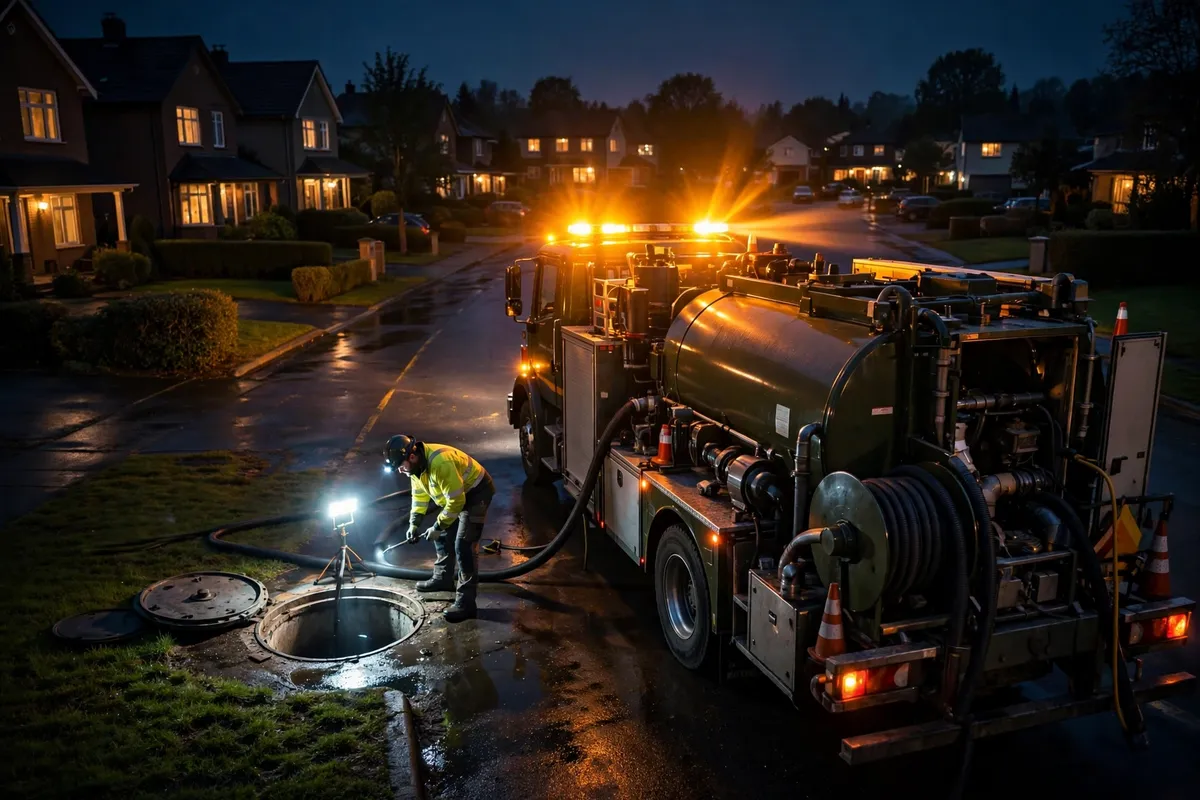
Sewage backing up into the house does not wait for business hours, and emergency septic pumping covington ky is the call you make when waiting is not an option. We run same-day emergency pump-outs across Covington and Kenton County — because the most common complaint about this trade, in real local reviews, is companies that ghost you when you need them most.
When we arrive, the job has two phases: first we pump the tank down and stop the immediate damage, then we find out why it happened. A pump-out relieves a backup; it does not fix the cause. You will know both — what we did tonight and what it will take to keep it from happening again — before we leave your driveway.
Emergency Septic Pumping Covington KY: When to Call Right Now
Call now if sewage is coming up through any drain, sewage is surfacing in the yard, or the tank alarm is sounding and the water is still rising — those are the three situations where waiting makes the damage worse.
We run same-day emergency pump-outs across Covington and Kenton County — 41011, 41014, 41015, and 41016 — because when sewage is in the house, 'we can fit you in Thursday' is not an answer. The most common complaint about this trade in real local reviews is companies that ghost you when you need them most. We built our emergency line around the opposite: a live answer, a real arrival window, and a truck that shows up inside it.
- Sewage backing up into tubs, showers, or floor drains
- Effluent surfacing or ponding in the yard
- High-water alarm sounding with fixtures still in use
What Counts as a True Emergency (and What Can Wait Until Morning)
Not every septic worry needs a night truck. Slow drains with no backup, a faint odor with everything flowing, or an alarm that just started with no water rising can usually wait for a scheduled visit — and waiting saves you the emergency fee.
The line is standing sewage or the clear threat of it. If toilets will not flush and the lowest shower is filling, that is tonight's problem. If the yard smells but the plumbing works, that is tomorrow's appointment. We will tell you which one you have when you call — we would rather talk you out of an emergency fee than collect one you did not need.
Emergency Pricing, Stated Plainly
Emergency pump-outs cost more than scheduled ones — that is true everywhere, and anyone who hides it is planning a surprise. Expect roughly 1.25× to 1.75× the standard pump-out rate, plus an emergency or after-hours fee that typically runs $150–$300 or more depending on the hour and the distance.
Two promises we make on every emergency call: the price we quote on the phone is the price on the invoice, and we tell you the fee before the truck rolls — never after the tank is open. A standard residential pump-out in Northern Kentucky typically runs $250–$700 depending on tank size; the emergency math starts from there.
What to Do While You Wait for the Truck
Stop running water. Laundry, dishwasher, long showers — all of it waits. Every gallon you send down has nowhere to go, and it will find the lowest drain in the house.
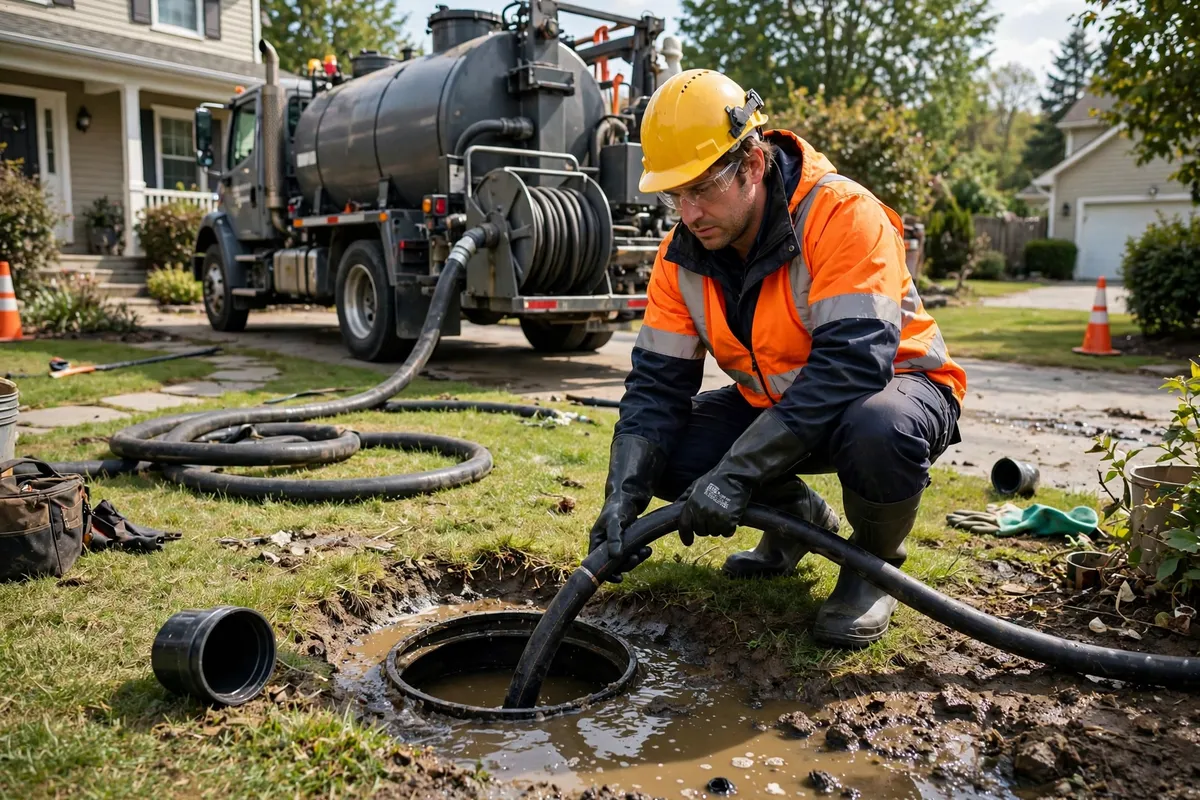
The single most useful thing you can do before emergency septic pumping covington ky arrives is simple: keep everyone off the water, keep kids and pets away from any surfacing sewage, and note where your tank access is if you know it. If you do not know where the tank is, tell us — we locate buried tanks, and knowing in advance saves dig time on arrival.
- Stop all water use — every fixture
- Keep people and pets away from surfacing sewage
- Note the tank location if you know it
- Do not open the tank yourself — the gases inside can be dangerous
Why So Many of Our Emergency Calls Start With 'The Other Company Never Showed'
Getting ghosted by a scheduled septic company is a real, named complaint in this market — one local reviewer wrote she had been ghosted twice before finding a company that actually came. When sewage is backing up, a no-show is not an inconvenience; it is damage by the hour.
Our emergency line exists for exactly that gap: a live answer, a real arrival window, and a truck that shows up inside it. Same-day service is the thing customers praise most in this trade's reviews — a driver at the door the same afternoon you called — and it is the standard we hold ourselves to.
New to septic service? The Covington Septic Pumping homepage walks through everything we do across Covington, KY.
Nights, Weekends, and Holidays: How After-Hours Works
Septic emergencies do not check the calendar — holiday gatherings overload borderline systems every single year, and winter weekends are our busiest emergency season. We answer after hours because that is when people need us.
When you call after hours, have your address, what you are seeing (backup location, alarm, yard surfacing), and whether you know where the tank is. We quote the emergency fee up front, give you an arrival window, and the tech calls when he is close. If the problem turns out to be a failed pump or a field issue rather than a full tank, we stabilize first and schedule the repair work in daylight — you will know the plan before we leave.
What Happens When the Truck Arrives
First we stop the damage: open the tank, pump it down, and get your fixtures usable again. Then we find out why it happened — because a pump-out relieves a backup, it does not fix the cause.
Once emergency septic pumping covington ky is on site, the job has two phases: immediate relief, then diagnosis. We check the baffles and filter, test the pump and floats, and watch whether water runs back into the tank from the drain lines — the telltale sign of a failing field. You get a plain-English explanation of what we found and what it will take to fix it, with ranges, before any repair work starts.
Know before you call
Is It a Real Emergency? A Calm Guide to Septic Triage
A true septic emergency is a short list: sewage is coming back into the house, sewage is surfacing in the yard, or the high-water alarm is sounding and the level is still rising. Nearly everything else — one slow drain, a faint odor, gurgling with no backup — is urgent but schedulable, and scheduling it saves you the emergency fee. This page walks through how to tell which one you have, what to do in the first half hour, and what the visit itself actually involves.
The triage table: what you are seeing, and how fast it has to move
Match what is happening in your house to the row below. The pattern that matters most: a problem in one fixture is a plumbing problem; a problem at every fixture is a septic problem.
| What you are seeing | Emergency? | What to do now |
|---|---|---|
| Sewage backing up into a tub, shower, or floor drain | Yes — call now | Stop all water use, keep people and pets away from it, and call. A backup starts at the lowest fixtures and climbs from there. |
| Sewage surfacing or pooling in the yard | Yes — call now | Keep everyone and pets off the area and stop running water. Surfacing effluent means the drainfield is failing, not just full. |
| High-water alarm sounding, level still rising | Yes — treat as an emergency | Cut water use to the bare minimum and call now. Caught at the alarm, it is a pump-out; caught after the backup, it is a pump-out plus a cleanup. |
| Every drain slow, toilets gurgling | Urgent — call today | Ease off the water and call the same day. Whole-house slowness and gurgling point at the tank or system, not one clogged pipe. |
| One slow drain, everything else normal | No — schedule it | A single slow drain is almost always a local clog in that fixture’s own line. Book a regular visit if it persists. |
| Odor only, drains working fine | No — monitor, then schedule | A brief smell in humid weather can be normal venting. An odor that stays all day, every day, earns an appointment — not a night call. |
Triage based on the failure-sign clusters documented in national septic-care guidance (Angi; The Healthy Attitude): backups begin at the lowest point of the drainage system, multiple slow fixtures signal a tank/system problem while a single slow drain is a local clog, and sewage surfacing in the yard indicates advanced drainfield failure.
The first half hour: what to do while you wait
Stop the water — all of it. No flushing, no laundry, no dishwasher, no long showers. Every gallon sent down a backed-up system comes back through the lowest drain in the house, and an average household runs about 70 gallons per person per day through that system. Check for a running toilet while you are at it: one can quietly add around 200 gallons a day. Keep people and pets away from any sewage, indoors or in the yard, until it is cleaned up. Leave the tank closed. Opening it is the crew’s job — there is nothing inside a tank a homeowner can fix, and the visit starts with locating and opening it properly anyway. Then gather what dispatch will ask: which fixtures are backing up and where they sit (the lowest ones matter most), whether the alarm is sounding, whether anything is surfacing in the yard, when it started, and where your tank is if you know it. Flagging known problems up front — and knowing the tank’s location — saves real time on arrival, because locating a buried tank and digging to its lid is the slow part of the visit. If you are cleaning up what already came in, protect yourself first — long rubber gloves and face protection — because backed-up sewage carries harmful pathogens. The EPA’s cleanup guidance: disinfect exposed areas with a mixture of 90% water and 10% household bleach, wash anything that touched the mess, and let the area dry completely — at least 24 hours — before using it again. If sewage has surfaced in the yard or entered living space, the Northern Kentucky Health Department (NKHD) is the local call for cleanup guidance. And one exception to everything above: if the ground around your drainfield is flooded or saturated, do not have the tank pumped at all — an empty tank can float out of the ground and tear its inlet and outlet pipes. Reduce water use, wait for the soil to dry, then have the system inspected.
What the emergency visit actually does
First, relief: the crew locates the tank (probing the ground if its spot is unknown), digs to and opens the lids, and vacuums the tank out with the truck — stirring the scum and sludge layers with a mixing rod so they actually leave with the liquid instead of staying behind. The pumping itself typically runs about 30 minutes to 2 hours, depending on tank size, how much has accumulated, and access. Then, diagnosis: a good operator may pause and shut the truck off to listen — effluent spilling back into the empty tank from the outlet line is the telltale sign of a saturated or failing drainfield. With the tank empty, the crew checks the interior walls for cracks or decay, the inlet and outlet baffles, and the effluent filter if your system has one. On systems with a pump chamber, the pump, floats, and alarm get checked too — and if a simple inlet blockage turns out to be the whole problem, it gets cleared on the spot. Lids go back on securely, dug soil is backfilled, and the work area is cleaned up. You should receive documentation of what was found — keep it; service records matter at resale. The waste itself is hauled to an approved treatment facility; in Kentucky, septic waste disposal is regulated under 902 KAR 10:170. And you will hear it plainly before the truck leaves: whether the pump-out solved the problem or only bought time — a tank that refills with groundwater, or a field that will not take effluent, needs repair work, not repeat emergency calls.
How the bill is built — and the insurance reality
Emergency septic pumping is priced in two parts: the pump-out itself, and an emergency or after-hours fee for pulling a truck and crew out at night, on a weekend, or on a holiday. Nationally, a standard residential pump-out typically runs $300–$600 for the 1,000- to 1,500-gallon tanks most homes have. The emergency premium takes two forms in published guides: a flat after-hours call-out fee of about $200–$500, or a multiplier of roughly 50% to 100% on top of the standard rate (some guides put the multiplier at 25–50%). All-in, a typical emergency visit lands around $600–$1,200 or more. Which is exactly why the triage above matters: if your situation can safely wait for a scheduled slot, waiting is the cheaper version of the same truck. And do not count on insurance to soften it. Homeowners policies generally treat a septic failure as maintenance, not a covered loss — and standard policies specifically exclude damage from water or sewage backing up through drains. The add-on that does exist, a water-backup endorsement (roughly $50–$250 a year for about $5,000–$25,000 of coverage), pays for the resulting interior damage — flooring, walls, cleanup — but still not for fixing the tank, lines, or field that caused it. In one documented case, a homeowner who ignored two months of gurgling drains ended up paying roughly $9,000 out of pocket — a full tank plus a cracked tank wall — and $800 of that total was emergency fees alone. The scheduled pump-out is the inexpensive version of that story.
Cost ranges: Angi 2026 and Liberty Home Guard national cost data (standard pump-out $300–$600); emergency surcharges and the $600–$1,200 typical emergency total from the EngineerFix emergency-cost guide (national data). The $9,000 case is a single documented homeowner story (Furilia), shared to show how costs stack — it is not an average price, and no verified Covington-specific pump-out price exists in our research.
Once the house is usable again, the follow-up matters more than the pump-out did. A septic system inspection documents whether tonight was simply a full tank or the first symptom of a failing field — and if the tank was just years overdue, a full septic tank cleaning is the reset that puts it back on a normal schedule.
Common questions
Frequently Asked Questions
Stop all water use immediately — no flushing, no laundry, no dishwasher. Keep everyone away from the backup, then call. Every gallon you send down while the system is backed up comes back through the lowest drain in the house.
Same-day for emergencies across Covington and Kenton County in most cases. When you call, we give you a real arrival window and the tech calls when close. If we cannot make your window, we tell you — we do not ghost.
Yes — emergency service runs about 1.25× to 1.75× the standard rate, plus an emergency fee of $150–$300 or more depending on the hour. We quote the total before the truck rolls, and the quoted price is the invoice price.
Treat it as urgent. The alarm means the water level is high — often a failed pump or a full tank. Stop heavy water use and call now; catching it at the alarm stage is cheaper than catching it at the backup stage.
No — and do not try. Septic waste is a health hazard, illegal dumping carries real penalties in Kentucky, and a rented pump cannot remove the compacted sludge a vacuum truck pulls. Licensed haulers take the waste to permitted facilities; you cannot do that part yourself.
Pumping buys relief, not a cure. If the cause was simply a full tank, you are good for years. If the field is failing or a pump is dead, it will back up again — which is why we diagnose on every emergency call and tell you what we found before we leave.
No. We clean the work area before we leave — that is a named review criterion in this trade, and we treat it as part of the job, not a favor. Buried lids get re-covered neatly, and we will quote you a riser so next time there is no digging at all.
It is the same call, and arguably the more serious one. Sewage surfacing in the yard means effluent is no longer being absorbed by the drainfield at all — the sign of an advanced or complete field failure, not just a full tank. Keep people and pets off the area, stop running water, and treat it as an emergency: pumping relieves the tank today, but expect the conversation to turn to the field.
Usually not. Insurers generally treat a septic failure as a maintenance issue rather than a covered loss, and standard policies specifically exclude sewage-backup damage. A water-backup endorsement (roughly $50–$250 a year for about $5,000–$25,000 of coverage) can pay for the resulting interior damage — floors, walls, cleanup — but it still does not pay to repair the tank, lines, or field that caused the backup. In one documented case, a homeowner paid a roughly $9,000 repair bill entirely out of pocket. It is one more reason the scheduled pump-out beats the emergency one.
Almost never. One slow drain with everything else flowing normally is a local clog in that fixture's own line; a system problem slows every drain at once and usually adds gurgling. Try the simple fixes, and if it persists, book a regular visit. Save the emergency fee for standing sewage or an alarm that will not quit.
Ready to Schedule Your Septic Service?
Call Covington Septic Pumping today. We show up on time, pump it fully, clean up, and honor the quoted price.
Call (615) 413-1746