Septic Tank Cleaning
A deeper clean-out for tanks that have gone too long between services or carry heavy buildup.
Learn More →Covington & Northern Kentucky Septic Pros
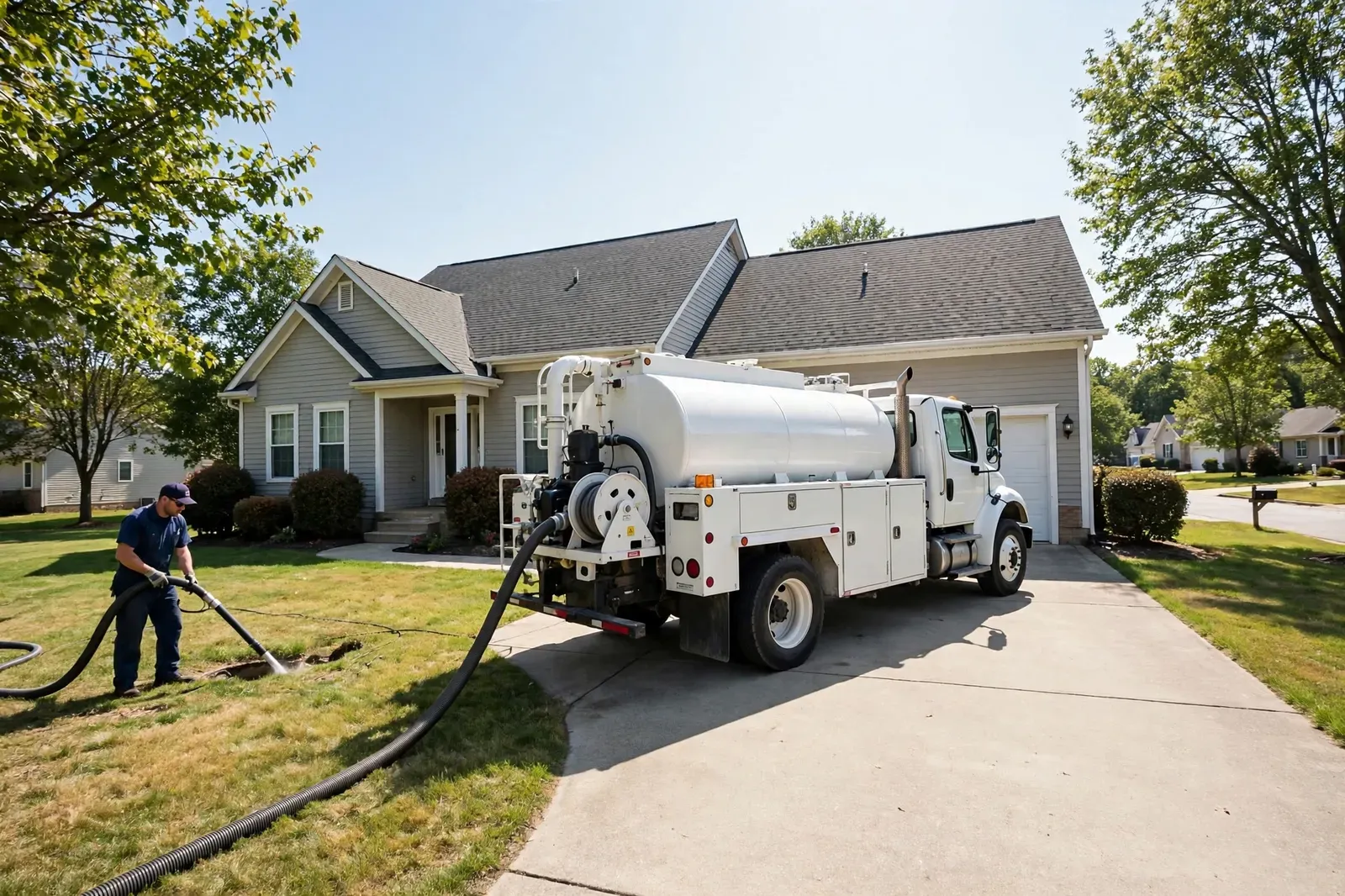
Fast, professional septic tank services Covington, KY homeowners trust — pumping and maintenance for homes and businesses throughout Covington and surrounding areas.
What we do
A deeper clean-out for tanks that have gone too long between services or carry heavy buildup.
Learn More →Tank opened and checked, baffles and filter examined, drain field walked — before you buy or when something seems off.
Learn More →Scheduled septic tank pumping and checkups that keep small issues from turning into drain-field repairs.
Learn More →Same-day septic tank pumping when sewage is backing up. We pick up and get a truck rolling.
Learn More →Scheduled pump-outs for restaurants, churches, schools, and rental properties — off-hours, with records for your files.
Learn More →Septic tank pumping and maintenance plans for businesses, rentals, and multi-unit properties.
Learn More →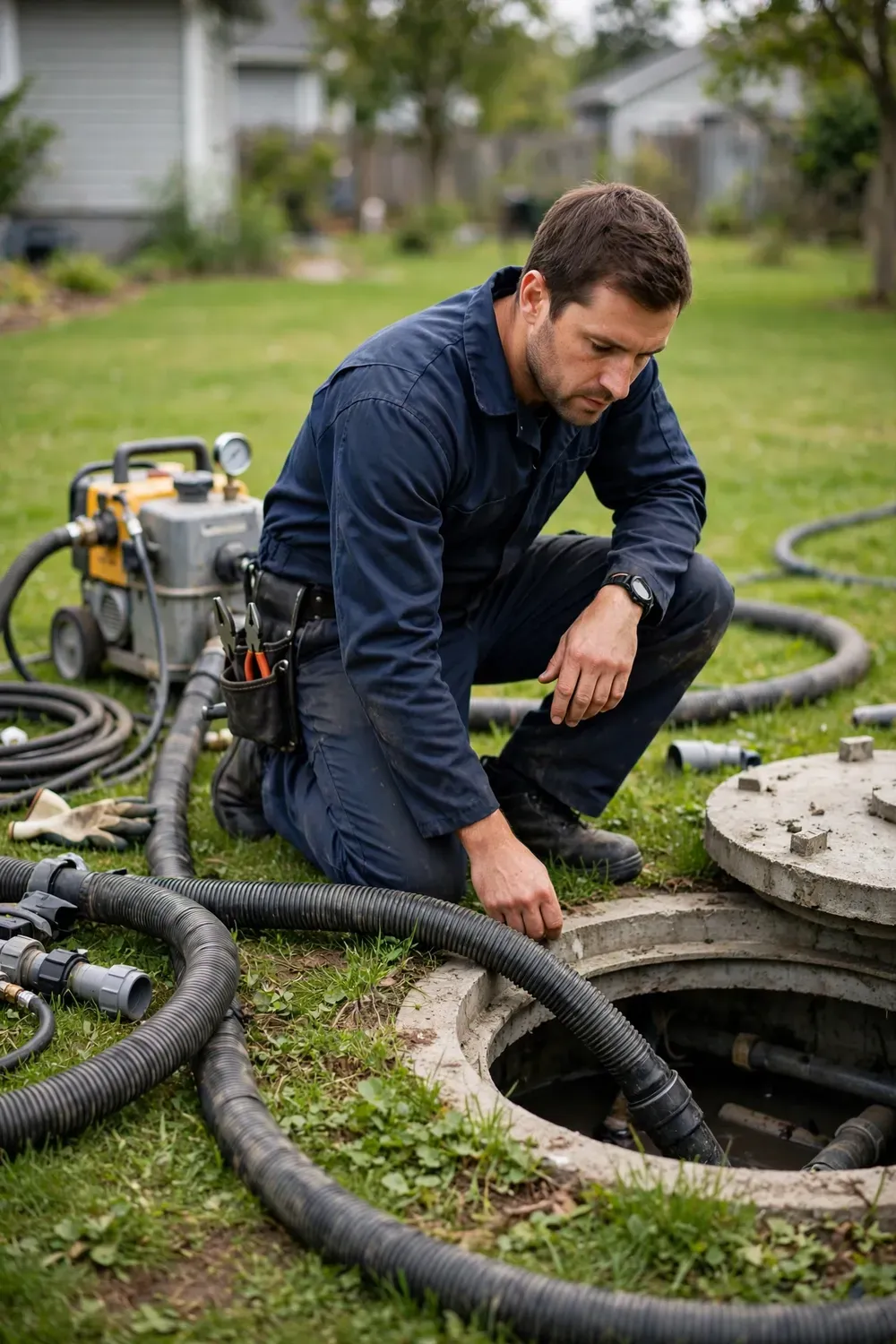
Why it matters
Solids settle and build up in every tank. Regular septic tank pumping keeps solids out of your drain field — where the expensive damage happens.
Slow drains, sewage odors, gurgling toilets, or soggy ground over the drain field mean it’s time to call.
High-capacity vacuum trucks and locators that find buried lids fast, without tearing up your yard.
Every load goes to a permitted disposal facility under Kentucky septage rules — never dumped on your property.
A 3–5 year pump schedule plus routine inspections is the cheapest septic insurance there is.
How it works
Tell us about your septic system and what you need — slow drains, odor, backup, or just ‘it’s been five years.’
Our technician arrives with professional equipment, locates the tank, and does the job right.
Tank pumped fully, baffles checked, yard cleaned up — and the price is exactly what we quoted.
Emergency service
Backups, odors, slow drains, or an overflowing tank only get more expensive with time. Get professional septic service before a bad day becomes a disaster.
(615) 413-1746 Call for Emergency ServiceWhy choose us
Local techs who do septic work every day.
Same-day service when it can’t wait.
Modern pump trucks and locating gear.
Quoted before we roll. Honored after.
Homes, rentals, and businesses.
Based in Covington, serving Northern Kentucky.
Yard left the way we found it.
Plain-language explanations, no pressure.
Know the signs
Age is the trigger the list above does not show: a conventional system lasts about 20 to 30 years, so if yours dates from the 1970s to the 1990s, the schedule is not optional - a skipped pump-out is how solids reach the drainfield, and a clogged field is the most expensive failure a system can have. Split the signs in two as well: sewage in the lowest drain, a backup, or a smell getting worse by the hour is a call-today job - see what counts as a real emergency. Slow drains and a three-to-five-year gap are schedule-this-month jobs.
Pumping guide
Septic risers are extensions that bring your tank lids up to ground level, so future pump-outs need no digging at all — and they typically pay for themselves within a couple of service visits by eliminating excavation charges.
Riser installation generally runs $200 to $600 per riser, and most residential tanks need one or two. It is the most common add-on sold at pump-out time, because the tech is already standing over the open tank. If your lids are buried, ask for a price while the hole is already open.
The full picture
A septic tank is a settling chamber, not a treatment plant. Everything from the house flows in through one main line; heavy solids sink into a sludge layer, oils and grease float into a scum layer, and the clearer middle layer — the effluent — flows out to the drainfield, where the soil does the actual filtering and treating. Pumping matters because it is the only step that physically removes the sludge and scum. Let either layer build too far and solids start migrating into the drainfield — and a clogged field is the most expensive failure a septic system can have.
New to septic? Start here: find the tank lid, ask the seller for the last pump-out date, and if nobody knows it, book a first pump-out and inspection after moving in - that visit sets the baseline, and the written record is what the next buyer, tenant, or inspector will ask for. What never goes down the drain, and why a riser saves the next dig, are covered below.
The EPA’s baseline: inspect the system every 1 to 3 years and pump every 3 to 5 years. The honest answer inside that range depends on tank size and how many people are filling it — and the real trigger is measurement, not the calendar. When sludge and scum together reach roughly one-third of the tank’s volume, it is due, whatever the date says. A garbage disposal shortens the interval, because ground food waste adds solids faster than the tank’s bacteria can break them down. A septic system inspection measures the layers so you are scheduling off facts, not guesses.
| Tank size | Typical home | Pump about every |
|---|---|---|
| 500 gallons | 1 bedroom | 5 years |
| 750 gallons | 2 bedrooms | 5 years |
| 1,000 gallons | 3 bedrooms | 3 years |
| 1,250 gallons | 4 bedrooms | 3 years |
| 1,500 gallons | 5 bedrooms | 2–3 years |
| 1,750 gallons | 6+ bedrooms | 2 years |
Intervals: national guidance compiled by Angi from EPA recommendations. Bigger households, heavy laundry habits, and garbage disposals all pull the date closer.
Nationally, a pump-out runs about $300–$600 for a typical residential tank, and size is the biggest driver — bigger tank, more gallons on the truck. Most Northern Kentucky homes sit on 1,000- to 1,500-gallon tanks. Access matters too: a lid that needs digging, or sludge left so long it has compacted, adds time to the job. We quote your exact price before we roll, and the quote is the price.
Ranges: Angi 2026 national cost data by tank size. Your quote depends on your tank, its access, and how much solid has built up.
Myth: additives mean you can skip pumping. The EPA does not recommend septic additives — a working tank already grows all the bacteria it needs, and no additive removes sludge or scum. Only the pump truck does that. Some solvent-based “drainfield restorers” are worse than useless: they can flush scum straight into the field. Myth: a packet of yeast keeps a tank healthy. Yeast is not what digests waste in a septic tank, and there is no substitute for pumping the solids out. Myth: if you are careful, you never need to pump. Careful use stretches the interval — it does not stop sludge from accumulating. Every tank fills; the only question is whether it gets pumped on schedule or after a backup. If your drains are already talking to you, a pump-out followed by a proper septic tank cleaning is the reset a neglected system needs.
Around here, private septic systems answer to the Northern Kentucky Health Department and Kentucky’s on-site sewage rules (902 KAR) — not to SD1, which runs the public sewer system. NKY Health has permitted and inspected local systems since 1982 and keeps the as-built record that shows where your tank and field sit. The stakes are documented, too: a state watershed study of Banklick Creek in Kenton County estimated roughly 1 in 10 on-site systems there was failing and leaking into the creek. Inside Covington itself, the city code (§157.102) sets its own conditions for on-site systems, including a one-acre minimum lot and an aerobic unit inside the urban service area. Translation: a neglected tank here is not just your problem for long — it becomes the neighborhood’s.
Service area
We are based in Covington and run service routes across Kenton County and the nearby river cities.
Local knowledge
Septic systems are still part of everyday life in Covington. From MainStrasse Village and Latonia to the neighborhoods inside ZIP codes 41011, 41014, 41015, and 41016, plenty of homes sit beyond the sewer lines — and every one of those tanks needs pumping every three to five years.
Most of Covington runs on city sewer through Sanitation District No. 1, but the state has funded SD1 sewer extensions to eliminate failing septics in three Kenton County neighborhoods — proof that an aging system left alone eventually becomes a neighborhood problem.
Permits and rules for on-site systems run through the Northern Kentucky Health Department under state regulation 902 KAR 10:085. Don’t know where your tank is? As-built records are public — NKY Health provides them through an Open Records Request, and we can help you pull yours before we come out.
Common questions
The EPA recommends septic tank pumping every three to five years and inspecting every three years. Bigger households and heavy water use push you toward the shorter end; a two-person household with light use can stretch toward five. Going much longer risks solids reaching the drain field, which turns a routine pump-out into a field repair.
The classic signs: sewage odor in the yard or when you flush, slow drains throughout the house, gurgling toilets, and plumbing backups in sinks or showers. Outside, watch for soggy ground or standing water over the drain field, one patch of unusually bright green grass, or a sunken area over the tank. Any one of these is worth a call before it becomes a backup.
In Northern Kentucky most residential septic tank pumping jobs run $250–$500 depending on tank size and how easy the lid is to reach; nationally the range is about $250–$700. Emergency or after-hours calls typically add a premium of 1.25x–1.75x the standard rate. We quote the job before we roll the truck, and the quoted price is what you pay.
No. Additives do not remove the sludge and scum that accumulate in the tank — only a pump truck does that. Plenty of long-time septic owners will tell you the same: regular septic tank pumping is what keeps a system alive, and no bottle from the hardware store replaces it.
Because pumping was never the fix — the drain field is the likely culprit. A quick field test: after the tank is pumped down, if water runs back into the tank from the drain lines, the field is not absorbing and needs attention. Septic tank pumping on a failed field just buys a little time; the field repair is the real job.
No — and a shovel will not do it. Septic waste is a health hazard, and Kentucky regulates how septage is hauled and where it can be disposed. A pump truck with a licensed disposal route is the only legal, safe way to empty a tank.
To a permitted disposal facility — typically a wastewater treatment plant or a licensed septage disposal site inspected by the health department. It is hauled there by truck under state septage rules, not dumped anywhere on your property or anyone else's.
Three questions: when was the tank last pumped (ask for the receipt), do you have maintenance records, and where exactly are the tank and drain field? Then get a dedicated septic inspection — tank pumped and opened, baffles and field checked — before closing. A standard home inspection does not cover the septic system, and a failed system can cost thousands to fix.
Start with your property's as-built record from NKY Health — it shows where the tank was installed. On the ground, pros look for the cleanout pipe, probe for the lid, or use an electronic locator on the line from the house. If your lid is buried with no riser, we will locate and expose it, and we can install a riser to grade ($200–$600 range) so nobody has to dig for it again.
Sewage surfacing in the yard, persistent wet spots over the drain field, sewage backing up into the house, and strong odors that do not go away after a pump-out. Important distinction: pumping a full tank will not fix a failed drain field — if problems return soon after pumping, the field itself needs attention.
Yes. A technician can measure the sludge and scum layers through the inspection port with a probe — no full excavation needed to check levels. But if the main lids are buried, they do have to be dug up to actually pump the tank, which is why many homeowners add risers at grade during the visit.
It can be — and it is one of the questions the EPA hears most. Three usual explanations: the household uses very little water, the tank is leaking (a low liquid level is the tell), or the tank is full of solids that are quietly migrating toward the drainfield. None of those is a clean bill of health. An inspection with the lids open will tell you which one you have.
Check your utility bill first — if there is no sewer charge, you are almost certainly on septic. Other clues: well water instead of city water, and a concrete or plastic riser lid in the yard, usually within about 10 feet of the house on the downhill side. Still unsure? NKY Health keeps the permit and as-built records for systems in Northern Kentucky and can confirm it.
Only human waste and toilet paper should be flushed — that is the EPA’s whole list. Never flush wipes (including the ones labeled “flushable”), diapers, cat litter, coffee grounds, dental floss, or paper towels; they do not break down and they fill the tank with solids that would otherwise never be there. Keep grease out of the kitchen sink, and keep paints, solvents, and harsh chemicals out of every drain — they kill the bacteria your tank runs on.
Yes — plan on the shorter end of the range. A disposal grinds food waste into the tank, and that extra solid load can build sludge roughly 50% faster than a household without one. If your kitchen runs a disposal daily and your tank is on the smaller side, a 2- to 3-year pumping rhythm is the safer habit.
Book a pump-out and inspection first, before the system gives you a reason to. The visit empties the tank, checks the baffles and the drainfield, and leaves you a dated record - which is also what a future buyer or inspector will ask for. From there, plan on the usual three-to-five-year rhythm, sooner if the household is large or the system is past 25 years old.

Dependable septic tank pumping from a local professional — on time, pumped fully, priced as quoted.