Covington, KY Septic Service
Septic System Inspection Covington KY
Routine inspections catch small problems while they're cheap. Transfer inspections protect buyers before closing. Here's what each one covers and what it costs.
- Tank, baffles, filter, and drain field all checked
- Written findings you can hand a buyer or lender
- Camera add-on available for lines and field laterals
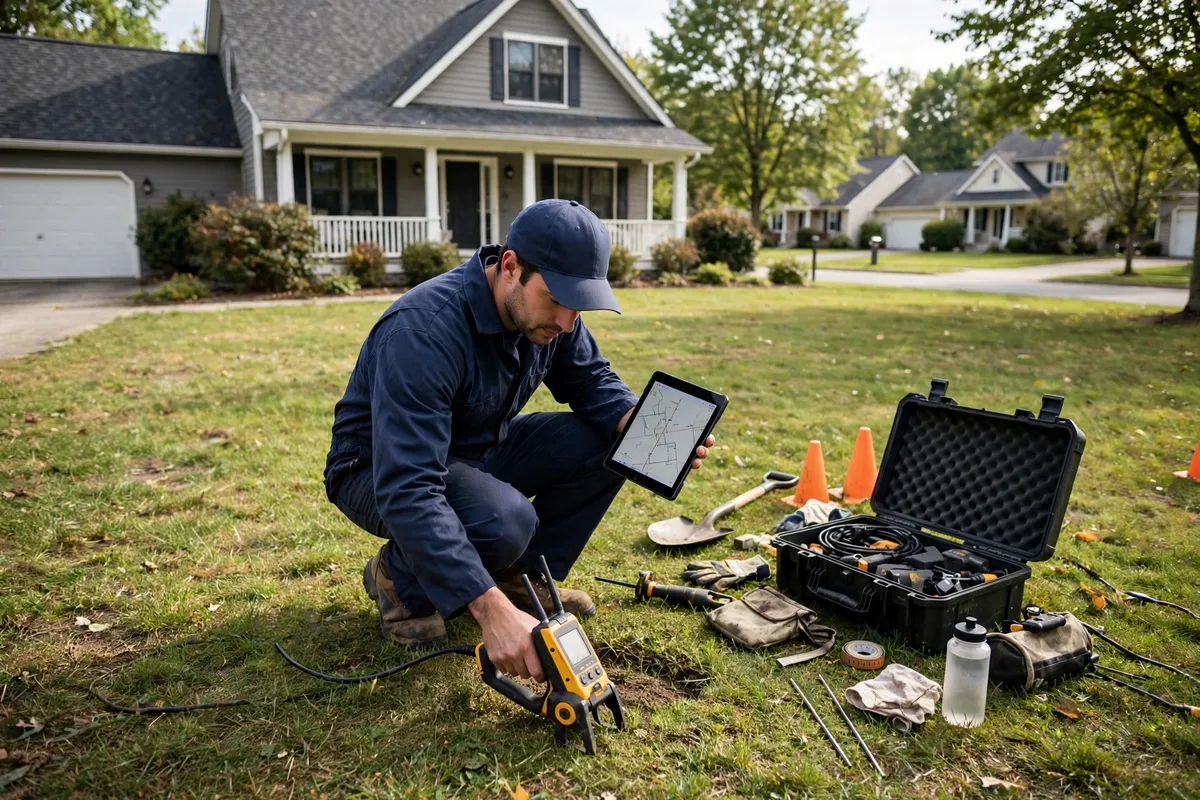
An inspection is the only way to know what is happening underground before it becomes an emergency. A septic system inspection Covington KY homeowners schedule every few years checks the tank's condition, the sludge levels, the baffles and filter, and the drain field — the parts you cannot see and the failures you cannot afford to discover during a backup.
There are two main kinds: the routine maintenance inspection that goes with regular pumping, and the deeper transfer inspection done when a house is bought or sold. Kentucky has no statewide law forcing an inspection at sale time — lenders and buyers drive that one. This page covers both, what each costs, and the Northern Kentucky Health Department rules that apply when you build, remodel, or sell.
Septic System Inspection Covington KY: What Gets Checked
A full septic system inspection covers the tank's structural condition, sludge and scum levels, inlet and outlet baffles, the effluent filter, the distribution box, and the drain field's absorption area for signs of failure like surfacing effluent or saturated soil.
The tech opens the tank and looks at what matters: cracks or deterioration in the walls, water level relative to the outlet (too high means the field is not taking water), baffle condition, filter condition, and measured sludge depth against the pumping threshold. Outside, they walk the drain field for wet spots, odors, and that telltale too-green grass, and check that surface water is not draining over the field.
What an inspection is not: a guarantee of future life. It is a condition report on the day it was done. A system can pass inspection and still be near the end of its service life — age matters, and the report should say so plainly. What it does give you is the information to plan: pump now, repair this, budget for that.
Routine Inspections: The Maintenance Checkup
A routine inspection is the lighter, cheaper check done every 2 to 4 years — often at the same visit as a pump-out — and it typically runs $150 to $450 depending on how deep the tech goes.
This is the EPA's recommended rhythm too: the agency advises inspection about every 3 years with pumping every 3 to 5. The routine visit is visual and measurement-based — tank condition, sludge levels, baffles, filter — without the full written report and field testing a real-estate transfer demands. Many homeowners simply have it done at pump-out time, since the tank is already open.
The value is early warning. A cracked outlet baffle found during a $200-range inspection is a few-hundred-dollar fix. The same baffle undiscovered lets solids into the drain field for years, and then you are pricing field work in the thousands. The inspection is the cheapest money in septic ownership.
Real-Estate Transfer Inspections: Buying or Selling
A transfer inspection is the deep, documented inspection done when a house with septic changes hands — and in this market it usually means pumping the tank open, inspecting every component, and delivering a written report the buyer, seller, and lender can all rely on. Expect $300 to $650, with complex or problematic systems running higher.
Here is the Kentucky-specific part: the state has no law requiring a septic inspection when a house is sold. The pressure comes from buyers, their agents, and lenders — and from the county. The Northern Kentucky Health Department handles existing-system inspections when a home is sold, an addition is built, or a home is rebuilt, and local building-code offices require a Health Department inspection of the existing system before issuing a building or remodeling permit.
Buyers should know two things. First, a standard Kentucky home inspection typically excludes the septic system — the general inspector looks at the house, not underground. Second, the questions that matter are simple: when was it last pumped (ask for the receipt), how old is the system, and are there maintenance records. A transfer inspection answers all three with the tank open, which is the only way to answer them honestly.
Most septic system inspection Covington KY appointments tied to a home sale include the pump-out in the same visit — you cannot properly inspect a full tank.
Camera Inspections: Seeing Inside the Lines
A camera inspection runs a small video camera through the inlet line, outlet line, and sometimes the drain-field laterals to find breaks, bellies, root intrusion, and blockages you cannot see from the tank. As an add-on it typically runs $125 to $500.
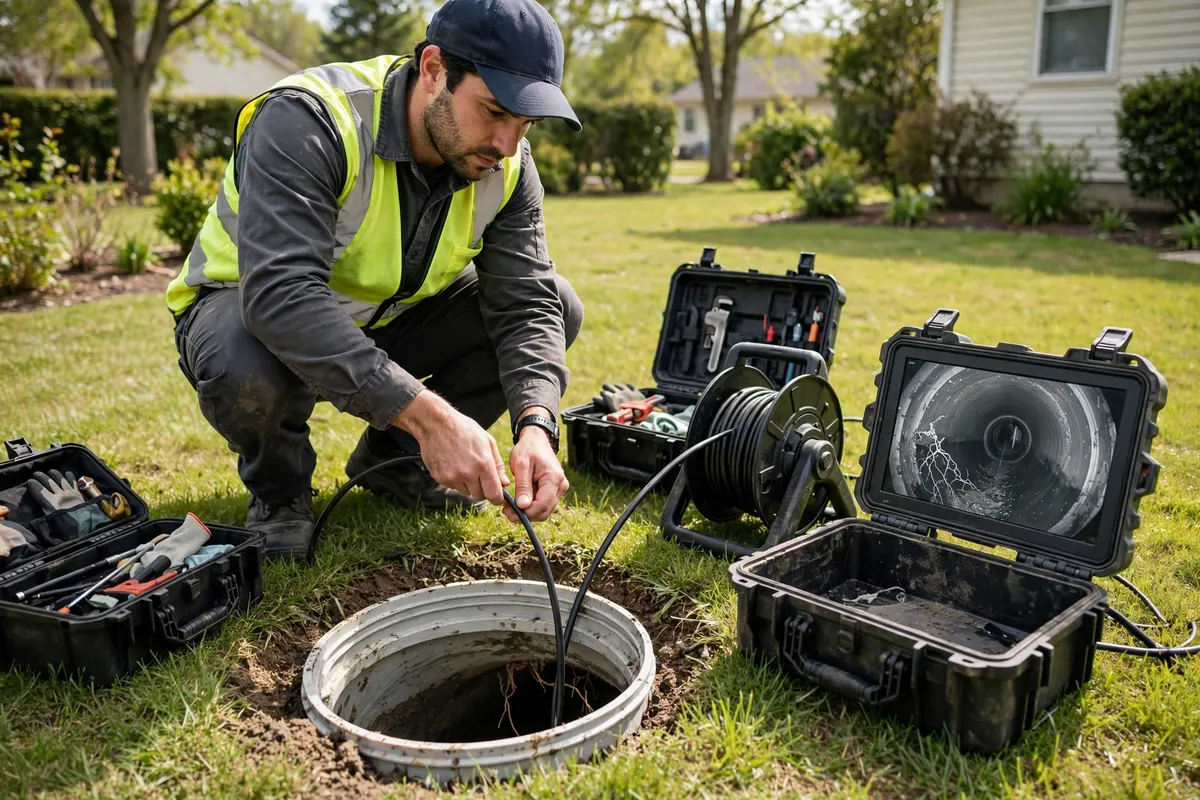
It is worth adding when there are symptoms a tank inspection cannot explain: recurring backups after pumping, one section of the field staying wet, or an older system where the lines' condition is unknown. Tree roots love the moisture around field lines, and a camera finds the intrusion before it becomes a collapse.
For buyers, the camera is cheap negotiating information. A clean camera run through the lines supports the asking price; root intrusion or a broken lateral found before closing becomes the seller's repair or a credit — either way, better discovered now than after the deed transfers.
For the full picture, start at Covington Septic Pumping — our home base for septic service in Covington, KY.
NKY Health Rules for Existing Systems
The Northern Kentucky Health Department — which covers Boone, Campbell, Grant, and Kenton counties from its Environmental Health office at 8001 Veterans Memorial Drive, Florence, KY 41042 (859-341-4264) — is the authority for on-site sewage in this area, and its existing-system inspection rules come into play at three moments: when a home is sold, when an addition is built, and when a home is rebuilt.
The rule buyers and remodelers hit most often: local building-code offices will not issue a building or remodeling permit until the Health Department has inspected the existing septic system. Planning an addition or a rebuild? The inspection comes first, before the permit — build that into the timeline.
One important distinction in the Health Department's process: if the system is actively failing — sewage surfacing, backing up — you do not request an inspection, you request a site evaluation instead, which starts the repair-permit path. And under state rule 902 KAR 10:085, any new construction needs a site evaluation and a construction permit before a shovel hits the ground, issued only to a certified installer or the homeowner.
Pulling Your System's Public Records
Before you pay for any inspection, check what the Health Department already has on file. As-built records of on-site septic systems are public records available from the Northern Kentucky Health Department through an open-records request — the request forms go to the department's designated records contact by email.
These records can show the original system design, tank size and location, field layout, and permit history. For a buyer, that is gold: it tells the inspector where to dig and tells you whether the system was ever permitted and inspected in the first place. For a longtime owner who has lost track, it answers the where-is-my-tank question without exploratory digging.
Ask for the records early in a purchase — they take time to process, and having them in hand makes the transfer inspection faster and more accurate.
What Happens After the Inspection
You get findings in plain language and a prioritized list: what needs pumping now, what needs repair soon, and what to budget for later. Most routine inspections end with a pump-out recommendation and maybe a filter or baffle fix — small work, handled the same week.
If the report flags bigger trouble — a saturated drain field, a cracked tank, a failed distribution box — the next step is a repair evaluation, not panic. Field rejuvenation runs $1,000 to $5,000 in many cases; partial repairs land in the same band; full field replacement is the big-ticket outcome at $3,000 to $15,000. Knowing the number early is exactly what the inspection bought you. See our septic tank repair page for the options.
For sellers: a failed transfer inspection does not have to kill the deal. Most failures get resolved as a seller-completed repair or a closing credit, and having the inspection done early in the listing — before a buyer's contingency clock is ticking — gives everyone room to negotiate. A septic system inspection Covington KY sellers order before listing often pays for itself twice: once in the repair it catches early, and once in the smooth closing.
How to tell a real one from a shortcut
What a Real Inspection Covers, Step by Step — and How to Spot a Fake One
A real septic system inspection follows a set sequence: pull the records, open the tank, measure the sludge and scum, pump the tank empty and examine the bare interior, test the drainfield, and hand you a written report with the numbers in it. Skip any of those steps and you did not get an inspection — you got a look. Here is the sequence, and the shortcuts that pass for one.
First: records, locating, and the sludge judge
The visit starts with paperwork and a probe rod, not a hose. In Kentucky, the permit and as-built record for your system is held by the local health department, and that record tells the inspector where the tank and field sit and how big the tank is. Then the lids come up — a little digging if they are buried — and the layers get measured with a sludge judge: a clear tube lowered through the tank that comes back up holding a sample column of exactly what is floating and what has settled.
Those two measurements run the whole visit. Pump time is due when sludge and scum together take up about a third of the tank, and the judge settles that question in inches, not opinions. A tank whose layers were never measured was never really inspected, whatever the invoice says.
Next: pump it empty and read the bare tank
You cannot inspect the inside of a full tank, so a full inspection pumps it out. Only with the tank empty can the inspector see the walls — cracks, corrosion, leaks — and check the inlet and outlet baffles and the effluent filter up close.
The liquid level tells its own story before the tank is even empty. Running abnormally high points at the outlet or the drainfield not taking water; running abnormally low means the tank itself is probably leaking. One case in a homeowner association's published failure files makes the point: a system about 20 years old, pumped on schedule, no smell, no wet spots — but the owner noticed the level sitting low before a routine pump-out, and the crew found a long crack in the concrete wall. The tank had been quietly leaking while every surface sign looked fine. That is the whole argument for opening tanks instead of admiring them from the driveway. When a pump-out leaves the walls coated, a septic tank cleaning in the same visit washes the interior down so cracks and root intrusion show up clearly.
Then: test the drainfield, not just the tank
A perfect tank on a failed field is still a failed system, so the field gets tested too — with a dye test, a hydraulic load test, or both. Non-toxic dye is flushed through the system; if dye shows up on the surface, the field is not absorbing. A load test runs a large volume of water to imitate a peak-use day and watches how the field handles it.
The inspector also checks the distribution box, walks the field for surfacing effluent and soggy ground, and notes the layout risks: how close the field sits to wells and water sources, and whether tree roots are in range of the lines. Know what a dye test cannot do, though — it says nothing about sludge depth, baffle condition, or a cracked tank wall. It tests one thing: whether effluent is reaching the surface.
Last: the written report
The visit ends with a written report: tank condition, the sludge and scum measurements, what was tested, and what needs pumping or repair. A typical inspection visit runs 1 to 2 hours, and that paperwork is the product — it is what a buyer shows a lender, what a seller attaches to a disclosure, and what you file next to your pumping records so the next inspector starts from facts. If the visit ends with a verbal 'looks fine' and no numbers, you bought an opinion. Opinions are free at the hardware store.
Quotes come in levels, and the names matter less than what is inside each one:
| Inspection level | What's included | Typical cost |
|---|---|---|
| Routine | Visual check + dye test | $200–$250 |
| Basic | Adds sludge & scum measurement and simple field tests | $250–$400 |
| Detailed | Adds flow/load testing, a tank-size audit, and soil checks | $400–$700 |
| Camera add-on | Video run through the lines and field laterals | +$100–$300 |
Levels and ranges: national inspection pricing compiled by KW Mountain Valley Homes; camera add-on range via iBuyer, citing Angi 2026 data. Level names vary by company — the written quote should list exactly what your inspection includes.
Red flags: inspections that aren't
Three shortcuts account for most worthless inspections: the tank never gets opened, a dye test gets sold as the whole job, or the visit ends in a sales pitch instead of a report. Each one is easy to spot once you know the real sequence.
- The drive-by. Nobody opened the tank, nobody measured anything, and it still only took twenty minutes. In one widely reported case, buyers were told their system was 'OK' after a plumber — not a septic contractor — 'inspected' it and found nothing. The tank turned out to be under the garage floor, collapsing, with the field under the driveway, and the family found out only after sewage backed into the house. The lesson drawn from that case: a real inspection is done by a septic contractor, and it includes locating the tank, opening it, pumping it out, inspecting the empty interior, and water-testing the field.
- The dye-test-only 'full inspection.' Dye is one field test. It cannot measure sludge, cannot see a rotted baffle, and cannot find a crack in the wall. Sold on its own, it is the cheapest tier wearing a detailed tier's price tag.
- The pitch instead of the report. Findings delivered as a same-day push for major work — or a monthly additive subscription — before any measurement is on paper. The EPA does not recommend additives; a working tank grows all the bacteria it needs, and no additive removes sludge. Honest findings come with numbers you can hand to a second company for a second quote. And if sewage is already surfacing in the yard while you are reading quotes, stop shopping for inspections — that is emergency septic pumping territory, and it gets handled first.
None of this requires you to hover over the crew. It only requires asking two questions before you book: 'Will the tank be opened and pumped so the interior can be seen?' and 'Do I get the measurements in writing?' A real inspector answers both without blinking.
Common questions
Frequently Asked Questions
No — Kentucky has no statewide law requiring a septic inspection at sale time. In practice, buyers request them, lenders often want them, and the Northern Kentucky Health Department performs existing-system inspections when homes are sold. Skipping it is legal; it is just unwise, because the buyer will ask anyway.
About every 3 years for a routine check, per the EPA — or every 2 to 4 years depending on your system and local guidance. Many homeowners have it done at pump-out time since the tank is already open. Transfer inspections happen once per sale, whenever the house changes hands.
Routine maintenance inspections typically run $150 to $450. Real-estate transfer inspections with a written report run $300 to $650, with complex systems higher. A camera inspection of the lines is usually an add-on at $125 to $500.
Yes. The Northern Kentucky Health Department handles existing-system inspections for Boone, Campbell, Grant, and Kenton counties — commonly requested when a home is sold, an addition is built, or a home is rebuilt. If the system is actively failing, request a site evaluation instead of an inspection. Their Environmental Health office is at 8001 Veterans Memorial Drive, Florence, KY 41042, 859-341-4264.
As-built records are public records available from the Northern Kentucky Health Department through an open-records request. The records can show tank size and location, field layout, and permit history — useful before you buy, and useful if you have lost track of where your own tank is.
It gives a condition assessment, not an expiration date. The inspector reports what they see — tank material and condition, field performance, component wear — and age informs the outlook: steel tanks typically last 20 to 25 years, concrete 40 or more with maintenance. A system can pass inspection today and still be near end of life; a good report says so.
Depth and documentation. A routine inspection is a maintenance check — visual, measurements, verbal or brief written findings, often bundled with pumping. A transfer inspection is forensic: tank pumped open, every component evaluated, drain field tested, and a formal written report suitable for buyers, sellers, and lenders.
Yes — in this area, local building-code offices require a Health Department inspection of the existing septic system before they will issue a building or remodeling permit. Schedule the inspection before you finalize construction timelines, because the permit waits on it.
Depth and testing. A routine check is a maintenance look — visual, layers measured, brief findings. A home-sale inspection is the detailed tier: the tank is pumped open so the interior can be examined, the baffles and filter are checked, the drainfield is tested with dye or a water load test, and everything lands in a formal written report a buyer, seller, and lender can rely on. It is the version you want when money is changing hands.
Plan on 1 to 2 hours for a typical visit. It runs longer when the lids are buried and have to be located and dug up first, or when a camera run through the lines is added. The written report is part of the visit — if a company quotes you fifteen minutes, they are quoting the drive-by, not the inspection.
No — a general home inspector's job is the house, and a glance at the yard is not a septic inspection. In one widely reported case, buyers were told their system was 'OK' after a non-specialist looked it over; the tank was later found collapsing under the garage floor, with the field under the driveway. A septic inspection means the lids come up, the layers get measured, the tank gets pumped and read from inside, and the field gets tested — a different visit, by a septic contractor.
Ready to Schedule Your Septic Service?
Call Covington Septic Pumping today. We show up on time, pump it fully, clean up, and honor the quoted price.
Call (615) 413-1746